
The Legend of Ethan Allen and the Capture of Fort Ticonderoga
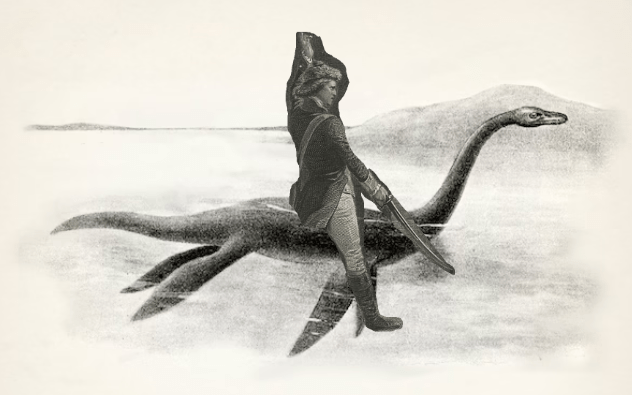
If you went to elementary school in Western Vermont, you’ve probably visited this place at least once. Fort Ticonderoga has long been a top field trip destination for fourth or fifth graders making their first (and for many of us, final) academic forays into Vermont history. However, since that’s the last time many of us study Vermont history, we miss out on the full story and it’s just presented as the legendary Ethan Allen crossing the lake, sitting astride Champ, with his trusty Green Mountain Boys in tow, seizing British cannons, and shipping them off to Boston to help win the war. Then, he and the rest of Vermont disappear from the founding narrative. Okay, I made up the Champ bit but it’s a fun visual and you all know that I love a chance to show off my photoshop skills. Graphic design is my passion, what can I say?
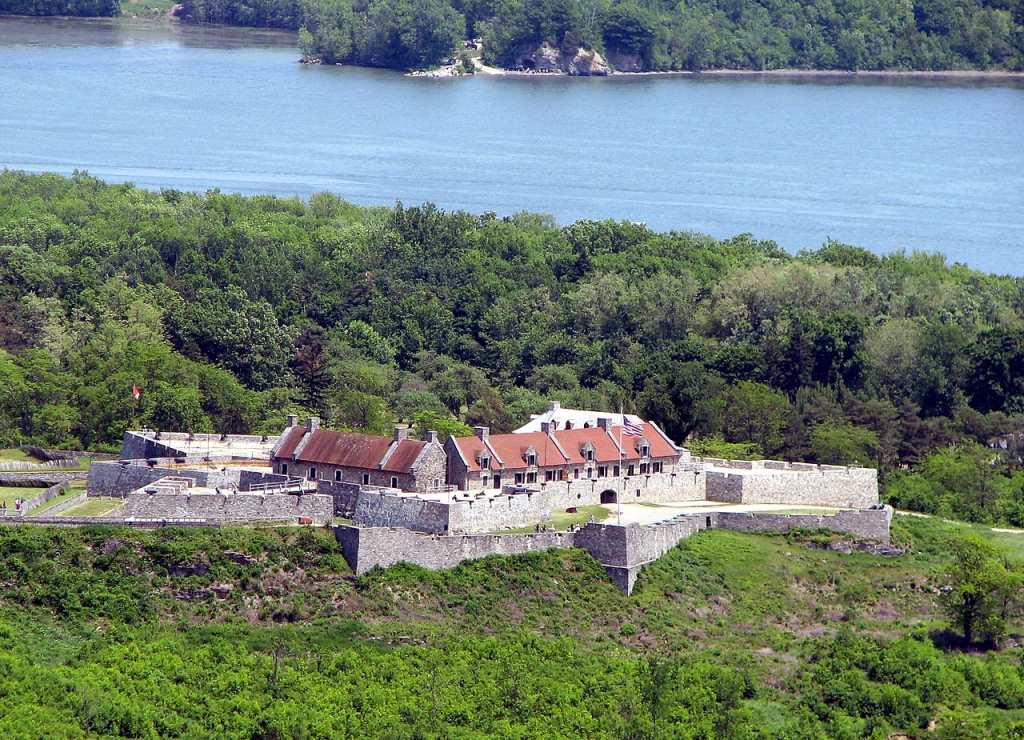
So, with the 250th anniversary of the fall of Fort Ticonderoga and the making of the legend of Ethan Allen just a few days away, I thought I’d take this chance to recount the full story for all of you. (As you might recall, there’s something in the name of this site about history AND politics, it’s about time that we got some history in here).
The Gathering Storm
The British put taxes on things like tea and paper and tried to take away the American Colonies’ right to self-governance. Many colonists didn’t like that very much and organized to protest British abuses. The British eventually suspended Massachusetts’s government and placed Boston under martial law, sending detachments of soldiers into the countryside to ferret out colonial stores of weapons and ammunition that might be used to foment an armed rebellion. These soldiers (allegedly) opened fire on colonial militias assembled to oppose them in Lexington and Concord, Massachusetts on April 19th, 1775, and were chased back into Boston. The militias, who came not only from Massachusetts but also from New Hampshire, Rhode Island, and Connecticut, encircled Beantown with a ring of camps and fortifications. However, they were unable to dislodge the British garrison because they had very few cannon, heavy artillery being rather a rare commodity among farmers and carpenters and the like but rather a necessity for a successful siege.
Fortunately, there were two sizable deposits of artillery not far away that were ripe for the plucking. Lake Champlain, which the Abenaki call Pe-ton-bowk, meaning “waters that lie between,” and which the Mohawk call Caniadari Quaront, “gateway of the good land,” has been a highway for traffic, commerce, and warfare since the retreating glaciers closed off the Champlain Sea more than ten thousand years ago and the first humans to live in what we now call Vermont and New York moved to the region. The French, recognizing the Valley’s strategic importance, built a string of fortifications along the Richelieu River and Lake Champlain, including Fort Saint-Frederic at present-day Crown Point, New York, and Fort Carillon (now Fort Ticonderoga). During the French-and-Indian War, which raged from 1754 to 1763, the British seized the forts on Lake Champlain. British victory in the war and their subsequent annexation of Quebec reduced the lake forts from vital strategic points on the North-South corridor from the Colonies to Canada to sleepy frontier backwaters. However, both retained large stores of French and British artillery.
Thus, when the Siege of Boston began, many minds in the colonies turned to Ticonderoga and Crown Point. A number of colonial governments and militias outfitted expeditions to seize the forts and their precious cannon. The government of Connecticut sent a group led by, among others, Epaphras Bull and Edward Mott, a detachment of militia from Pittsfield, Massachusetts led by Colonel James Easton marched north, and the Provincial Congress of Massachusetts tapped a plucky upstart named Benedict Arnold (yes, that Benedict Arnold) to ride north, gather a force, and take the forts.
In the disputed territory between New Hampshire and New York known as the “New Hampshire Grants,” another group of patriots turned their eyes across the lake to the outposts. The Green Mountain Boys were a militia formed to resist the attempts of New York’s government to displace settlers who had received grants from the Governor of New Hampshire. Led by Ethan Allen and members of his extended family (including his brother Ira, his cousin Seth Warner, and his other cousin, the memorably named Remember Baker), the “Boys” had spent much of the previous five years harassing New York’s surveyors, judges, and other officials. Now, however, they too were setting out to seize Ticonderoga and Crown Point and use its cannon for the salvation of Boston.
A Council of War
Arnold made his way north to Bennington, home of the Catamount Tavern where the “Boys” had their headquarters. On hearing that Allen, along with the Pittsfield and Connecticut contingents, had already marched to Castleton, Arnold raced to catch up with them.
At Castleton, the leaders of the assembled forces had convened a Council of War and had elected Allen to lead the expedition. When Arnold arrived, he presented his commission from the Massachusetts Congress and demanded that he be given command. However, many of the men (especially the Grantsmen, who felt a strong loyalty to Allen) were put off by Arnold’s attitude and indicated that they would not serve under him. Arnold and Allen worked out some sort of agreement: historians disagree as to what exactly it was. Arnold claimed that Allen made him co-commander of the expedition. If this is so, it was probably much in the same way that a small child is the “sous chef” of their parent’s kitchen or the “co-pilot” of their car. Some historians suggest that Allen only offered to allow Arnold to march with him at the head of the column to placate his ego.
Having Fun Storming the Castle
Shortly before Arnold had arrived, detachments had been sent to Skenesboro (present-day Whitehall, New York) and Panton to secure boats for the lake crossing. The assembled militia marched to Hands Cove in Shoreham, near where Route 74 meets the Ticonderoga Ferry today. There were insufficient boats to carry all of the men across the lake at once, and they had arrived late (at about 1:30 in the morning) so about 80 men made the crossing with Arnold and Allen and the boats returned to Shoreham for the rest. As dawn neared, the rest of the men had not yet arrived, so Allen and Arnold elected to take the fort by storm with the men they had for fear of losing the element of surprise.
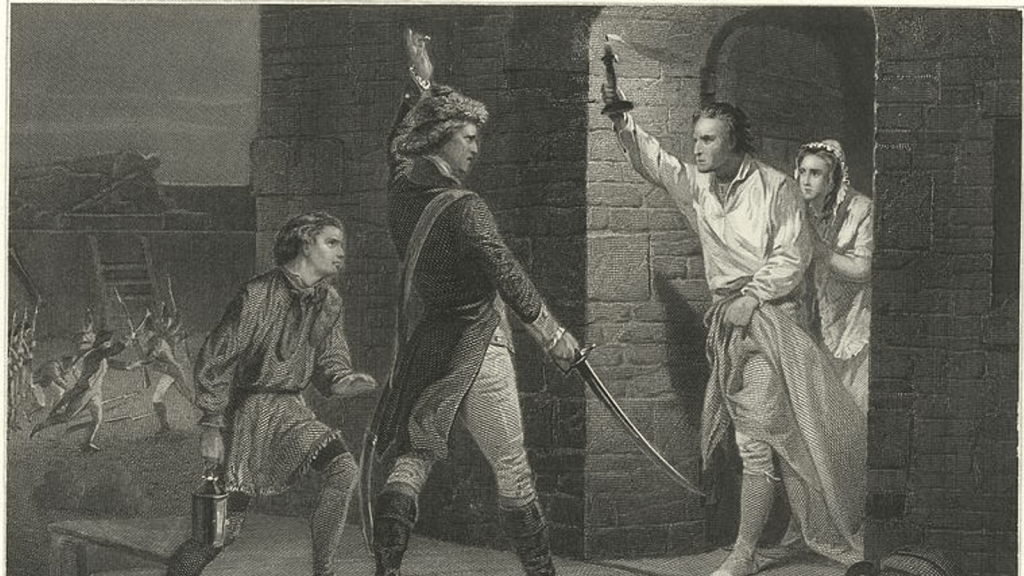
It is here that the legend of Ethan Allen truly begins. Allen was a very successful self-promoter with a flair for the dramatic. As he recounted the story, he beat upon the door of the commander’s quarters and the commander, Captain William Delaplace, came to meet him “with his breeches in his hand.” Allen then demanded the surrender of the fort “in the name of the Great Jehovah and the Continental Congress.” Allen dispatched the prisoners to the Governor of Connecticut with the grandiose message: “I make you a present of a Major, a Captain, and two Lieutenants of the regular Establishment of George the Third.”
A perhaps more accurate account had Allen demanding the fort’s surrender first from Lieutenant Jocelyn Feltham, the fort’s second-in-command, and then calling on Captain Delaplace to “come out of there, you old rat,” before a (fully-clothed) Delaplace emerged to offer his surrender.
Another detachment of the Green Mountain Boys, led by Seth Warner, successfully captured Crown Point just a day or so later. The post was held by only nine men. Arnold and the Connecticut and Massachusetts men busied themselves cataloguing the artillery and others stores at the two posts, while the Green Mountain Boys busied themselves with plundering Ticonderoga and drinking their way through Captain Delaplace’s liquor.
Eventually, Colonel Henry Knox of the Continental Army made his way to Ticonderoga to bring the artillery south for the Siege of Boston. His “noble train of artillery” dragged 59 cannon on ox-drawn sledges over icy Lake George, down through New York and over the Berkshires. The train finally arrived in Boston at the end of January, 1776, following a journey of nearly three months through a brutal New England winter. The cannon opened fire on the British in March, forcing their evacuation and scoring the first major victory for the burgeoning rebellion. You probably know the rest of the story from there, but that wasn’t the end of Vermont’s involvement in the tale.
Canadian Postscript
The end of the story of the capture of Ticonderoga (and the ignominious end of Allen’s involvement in the war) transpires, oddly enough, in Canada.
Arnold’s men had captured a small British vessel at Skenesboro and sailed her north to Ticonderoga. Arnold elected to sail down the lake to St-Johns (present-day St. Jean-sur-Richelieu), the last remaining British post on the lake, and attempt to take the garrison there by surprise. Allen and the Green Mountain Boys, not wanting to let Arnold steal the glory of capturing St-Johns as well, followed in a number of bateaux, essentially large rowboats. However, Arnold had the advantage of sails and the wind, and thus reached St-Johns while Allen’s men were still rowing their merry way down the lake. They captured the post and a second British ship along with more supplied and began their return journey up the lake.
They encountered Allen’s flotilla near Alburgh. Allen’s men were quite hungry as they had forgot to stock their boat with provisions before setting out. Arnold fed Allen’s men and tried to dissuade Allen from continuing on to St-Johns, as the raid would almost have certainly drawn out British forces from Chambly and Montreal. Nevertheless, Allen persisted, encountered a sizable contingent of British troops, and elected to retreat.
Some months later, Allen lost command of the Green Mountain Boys when his men, growing tired of his egoism and shenanigans, elected to replace him with Seth Warner who was deemed to be more even-keeled. Allen, now without a command but no less lacking in ego, placed himself at the disposal of Richard Montgomery, the Continental general who was commanding the planned invasion of Quebec. He no doubt hoped to receive a command or another suitable position in reward for his capture of Ticonderoga. Montgomery, likely not wanting to have to deal with Allen’s escapades, sent Allen into Canada to raise a regiment of sympathetic Canadiens to support the invasion. Allen interpreted this as an opportunity to try to capture Montreal, which he did, with a force of just more than a hundred men.
As one might imagine, this did not end well. Allen claimed that another colonial officer, John Brown (not that John Brown, he hadn’t been born yet) had promised to support his attack but failed to appear. Whatever the case, Allen was captured and was held in captivity for nearly three years, the longest tenure of any American officer as a prisoner-of-war during the Revolution.
Allen continued to be involved in Vermont politics (I could write a whole separate article about his post-carceral activities) but his military career was over. He published a book about his experience as a prisoner-of-war with the ostentatious title “A Narrative of Colonel Ethan Allen’s Captivity … Containing His Voyages and Travels, With the most remarkable Occurrences respecting him and many other Continental Prisoners of Observations. Written by Himself and now published for the Information of the Curious in all Nations,” which notably excluded Arnold from his account of Ticonderoga and Warner from his account of the leadership of the Green Mountain Boys. It’s always worth questioning who writes the history that we read, because they might have ulterior motives. Except me! (kidding, of course).
While I could write many more pages about Allen, the Green Mountain Boys, and Vermont and the Revolution, this seems like an appropriate place to leave things for today. I hope you enjoyed this little foray into the wonderful world of history. If you get a chance to visit Fort Ticonderoga and Crown Point, I highly recommend it. It’s a nice little day trip. Stay dry!
Sugaring Off is powered by readers like you! If you can spare some change to help keep the lights on, I’d greatly appreciate it: https://ko-fi.com/sugaringoff.
 Sugaring Off: Vermont Politics and History, Plain and Simple
Leave a comment